Abstract
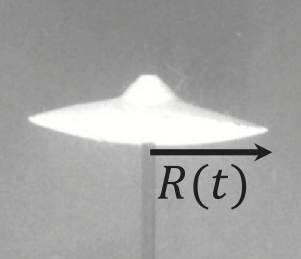
Hydraulic fracturing plays an important role in meeting today's energy demands. However, the substantial use of fresh water in fracturing and wastewater returning to the surface pose risks to the environment. Alternative technology has been developed that reduces the water-related risks by injecting aqueous foam instead of water to fracture shale formations, but the mechanism is poorly understood. Here, we show, using laboratory experiments, that the injection of foam instead of water dramatically changes the fracture dynamics when the foam compressibility is important. We develop a scaling argument for the fracture dynamics that exhibits excellent agreement with the experimental results. Our findings extend to other systems involving compressible foams, including fire-fighting, energy storage using compressed foams, and enhanced oil recovery. In hydraulic fracturing, water is injected at high pressure to crack shale formations. More sustainable techniques use aqueous foams as injection fluids to reduce the water use and wastewater treatment of conventional hydrofractures. However, the physical mechanism of foam fracturing remains poorly understood, and this lack of understanding extends to other applications of compressible foams such as fire-fighting, energy storage, and enhanced oil recovery. Here we show that the injection of foam is much different from the injection of incompressible fluids and results in striking dynamics of fracture propagation that are tied to the compressibility of the foam. An understanding of bubble-scale dynamics is used to develop a model for macroscopic, compressible flow of the foam, from which a scaling law for the fracture length as a function of time is identified and exhibits excellent agreement with our experimental results.